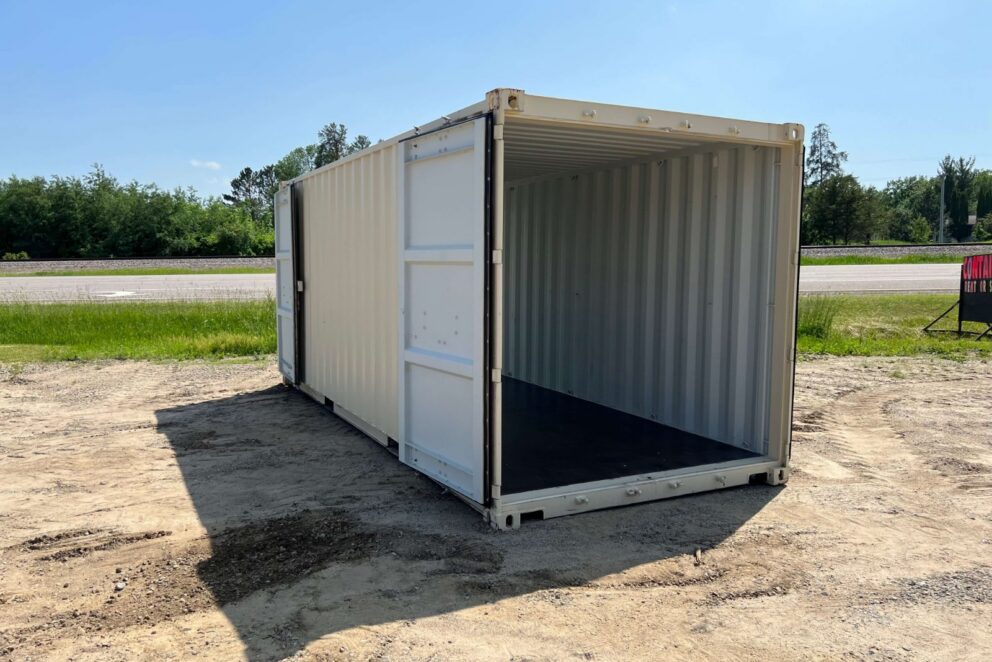
Minnesota garages fill up fast. The truck takes one stall. The sleds, the mower, the ATV and the snowblower fight over the rest.
A shipping container garage gives that gear its own locked steel building. It arrives in one trip, sits at ground level and needs no build time.
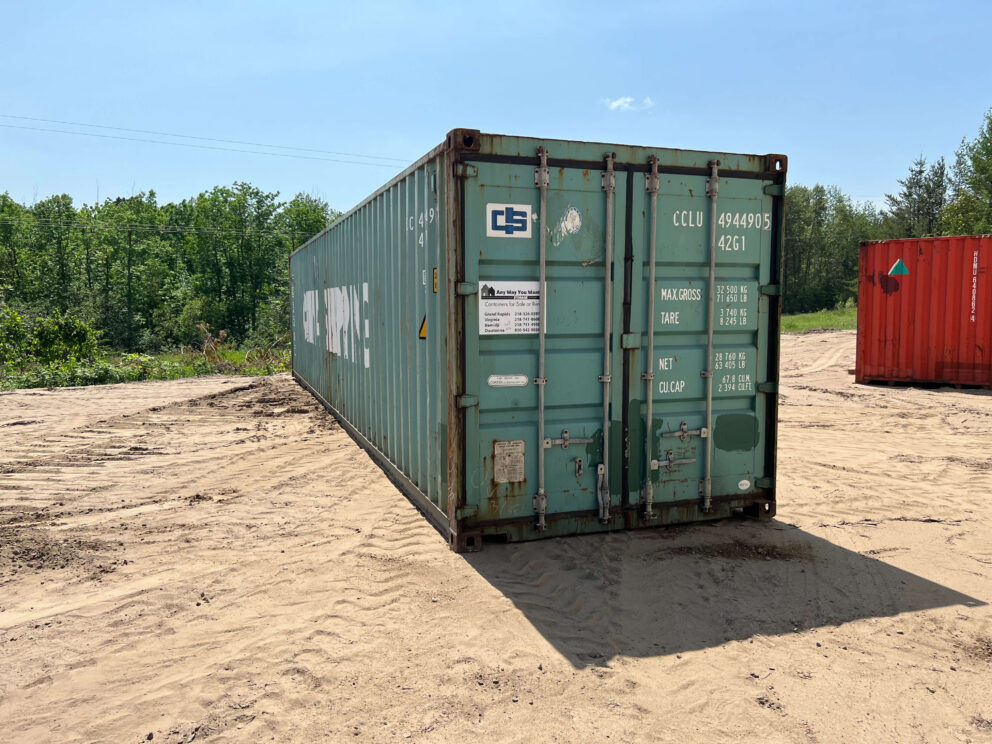
It is not a finished garage on delivery day, though. A standard container is a steel storage box with cargo doors. Whether it works for your vehicle comes down to three numbers: door width, door height and interior length.
Here is how to check them before you order.
Can You Use a Shipping Container as a Garage?
Yes, for most seasonal equipment and many vehicles. Snowmobiles, ATVs, side-by-sides, riding mowers and most sedans clear a standard door opening. Full-size crew cab pickups are the common exception in a 20 foot unit.
Every container we deliver is:
- Wind and watertight
- Rodent-proof
- Fitted with lockable doors and solid floors
What it does not come with is a drive-in threshold, power or airflow. Those come from site prep and container modifications. Plan for them up front.
Shipping Container Garage Dimensions
Every container we stock is 8 feet wide on the outside. Length and height change. These are the numbers that matter for vehicles.
| Size | Interior (L x W x H) | Door opening (W x H) | Best for |
|---|---|---|---|
| 10 foot | Exterior 10′ x 8′ x 8’6″ | Ask for current specs | Push mowers, snowblowers, tools |
| 20 foot | About 19’4″ x 7’8″ x 7’10” | About 7’8″ x 7’6″ | One car, one sled or one side-by-side, plus mowers |
| 40 foot | About 39’5″ x 7’8″ x 7’10” | About 7’8″ x 7’6″ | Two cars, three trail sleds, a full-size pickup |
| 40 foot high cube | About 39’5″ x 7’8″ x 8’10” | About 7’8″ x 8’5″ | Tall machines, lifted rigs, racking |
The door opening is the real limit, not the box. A machine that fits the interior can still miss the door.
High cubes are available on 20 and 40 foot units. Ask about current stock when you call. Our container size guide compares every option side by side.
What Fits in a Shipping Container Garage?
Use this table as a starting point, not a guarantee. Model years, trims and accessories change the numbers. Check your owner’s manual for width with mirrors, overall length and height before you commit.
| Vehicle or equipment | Example size (W x L x H) | 20 foot | 40 foot | Watch for |
|---|---|---|---|---|
| Trail snowmobile, 146″ track | 47″ x 125″ x 54.5″ (Polaris Voyageur 146) | One sled plus gear | Three, nose to tail | Two sleds need about 250″ end to end. A 20 has about 232″. |
| ATV | Varies by model | Yes | Yes, several | Racks and plows add width |
| Side-by-side (UTV) | 50 to 64″ x 102 to 150″ x 69 to 74″ (Polaris RZR range) | One | Two, plus gear | Roofs, light bars and whips add height |
| Riding mower or zero-turn | Varies by deck size | Yes | Yes | Deck width and fuel |
| Sedan or small SUV | Check your spec sheet | Yes, with a ramp | Two cars | Mirror width and door swing |
| Full-size crew cab pickup | About 80″ x 232″ x 75″ (2026 F-150 SuperCrew, 5.5′ bed) | No | Yes | 95.7″ wide with mirrors. Fold them to clear a 92″ door. |
Two things the table cannot show you.
First, a 20 foot container is the same length as a crew cab F-150 with a short bed. On paper it fits. In practice, you cannot close the doors.
Second, fitting is not the same as parking. The interior is 7’8″ wall to wall. A car about 6 feet wide leaves roughly 10 inches per side. You will not open the driver’s door. A container garage works best as a place to load a vehicle and leave it for the season, not as a daily parking spot.
Door Clearance, Thresholds and Access
Width
The cargo doors open about 7’8″ wide. Measure the widest point of your machine. On a car, that is usually the mirrors. On a sled, it is the skis. On a mower, it is the deck.
Height
The door opening runs about 7’6″ high on a standard unit. Most stock vehicles clear it. Lift kits, roof racks and cab-mounted light bars are where people get caught. A 40 foot high cube raises the opening to about 8’5″.
Threshold
The container floor sits above the ground. That step-up is the biggest practical difference from a stick-built garage. You need a ramp to drive or roll anything in, and low-clearance cars may scrape. Keep the container level so the ramp angle stays consistent.
Length
Measure bumper to bumper. Then add room to close the doors and walk around the machine.
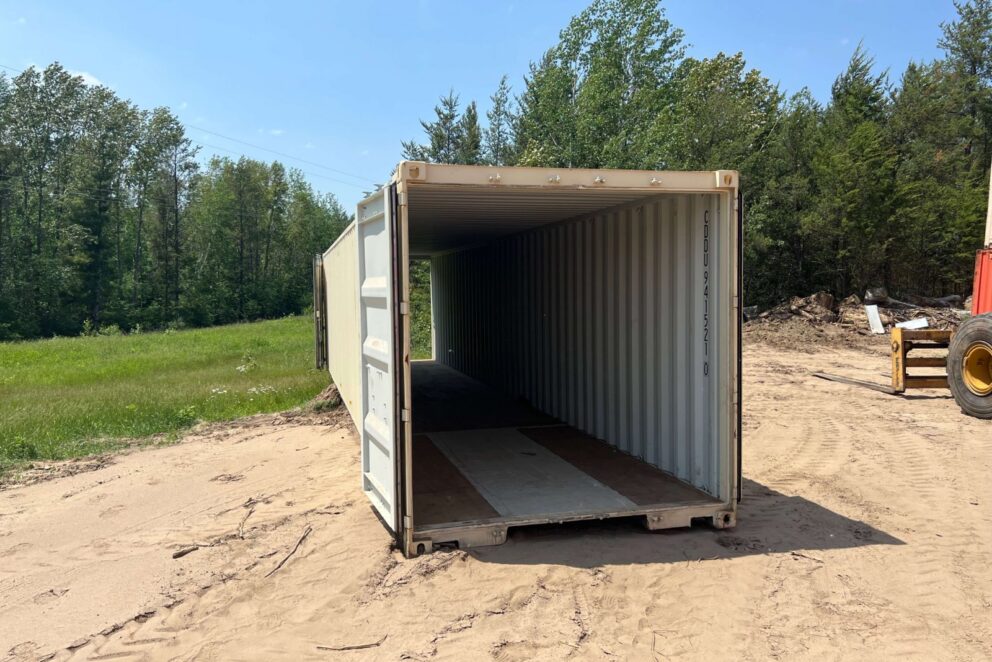
Drive-through access
Doors at both ends let you pull in one side and out the other. That helps with long equipment and lets you reach a second machine without moving the first.
Ventilation, Moisture and Fuel
A sealed steel box keeps rain and snow out. It also keeps moisture in. Freeze-thaw cycles cause condensation on the walls and ceiling, and it drips onto seats, electronics and paint.
Three fixes:
- Add vents. We offer vents and lighting as modifications.
- Use breathable covers, not plastic tarps that trap condensation.
- Ask about insulation if you store anything temperature sensitive.
Fuel and batteries need their own plan. Never run an engine inside a closed container. Follow your manufacturer’s storage steps for fuel and stabilizer. A standard container has no power, so pull batteries or arrange a power supply for a charger before winter. Check local fire codes for fuel storage rules too.
Our guide to preparing your container for a Minnesota winter covers condensation, door seals and snow in more detail.
Modifications That Make a Container Work Like a Garage
We modify 20 and 40 foot units in-house. The options that matter most for vehicle storage:
- Doors at both ends for drive-through access
- Side doors and man doors, so you can get in without opening the cargo doors
- Roll-up doors
- Windows for daylight
- Vents and lighting
- Shelving for tools, helmets and parts
- Custom paint, including camo
One caution. If you want a roll-up door for vehicle access, ask for the finished opening size before you order. The door has to clear your widest machine, not just look like a garage door.
See more in our roundup of top shipping container modifications.
Site Prep for a Minnesota Container Garage
Placement decides how usable a container garage is in February.
- Pick level ground that drains. Snowmelt pooling under the box leads to rust.
- Support the corners. Lay gravel or blocking under all four. A 20 foot container needs a flat spot about 8 feet wide and 22 feet long. A 40 needs about 8 by 44.
- Choose the door direction before delivery. Leave room in front for the ramp, the vehicle and the plow.
- Keep the doors clear all winter. Ice at the threshold will lock you out.
We set containers at ground level with tilt-bed and side-loading trailers. No crane needed. Full details are on our container delivery page, and our guide to shipping container foundations for Minnesota ground covers the site itself.
One more tip. In fall, push the mowers to the back and park the sleds by the doors. Swap them in spring. What you use most stays up front.
Rent, Buy or Rent to Own?
Rent if you need seasonal space or a stopgap while you build. Rentals run by the day, week, month or year, month to month with no long-term contract. In our service area, a 20 foot unit runs $95 to $150 per month and a 40 foot unit runs $140 to $180+ per month.
Buy if the container stays and you plan to modify it. Once you are cutting in doors and vents, ownership makes sense.
Rent to own if you want to start small. Your payments build toward ownership.
Compare your options on our shipping container rental and buy a shipping container pages.
Shipping Container Garage FAQs
Can a car fit in a 20 foot shipping container?
Yes. Most sedans and small SUVs fit. You need a ramp, and you should check your mirror width against the 7’8″ door opening. Expect very little room to open the car doors inside.
Will a full-size pickup fit in a shipping container?
Not in a 20 foot unit. A crew cab with a short bed is about as long as the 20 foot interior. A 40 foot container fits it lengthwise. Fold the mirrors to clear the door.
How many snowmobiles fit in a shipping container?
One full-size trail sled fits a 20 foot unit with room for gear. A 40 foot unit fits three 125-inch sleds nose to tail. Shorter sleds change the math, so measure yours.
Can I drive straight into a shipping container?
Not without a ramp. The floor sits above ground level. Use a ramp rated for your vehicle’s weight.
Do I need a permit for a shipping container garage in Minnesota?
Rules vary by city and county. Some allow containers on residential lots with no permit. Others restrict placement, screening or duration. Call your local zoning office before delivery day.
Is a shipping container cheaper than building a garage?
It depends on size and finish. A container needs no build time, locks up tight and moves when you move. A stick-built garage gives you more width and a level entry.
Get a Quote on Your Container Garage
Walk our yards in Grand Rapids, Ellendale or Stewartville and pick your own container. Tell us what you are parking and where it is going. We will tell you what the container needs and price the delivery.
Call (218) 326-0397 in Grand Rapids or (800) 542-0036 for Ellendale and Stewartville. You can also request a free quote online.