Most people searching for a shipping container foundation do not need a foundation in the house sense. They need a base that stays firm, level, and dry through a Minnesota winter and the spring thaw that follows.
The right base depends on three things. How long the container will sit. What you plan to do with it. And what kind of ground you have. A 20-foot rental on a farm driveway for two months has very different needs than a modified 40-foot workshop that stays put for ten years.
We deliver and set containers from our Grand Rapids, Ellendale, and Stewartville yards. We do not pour concrete, dig footings, or grade sites. This guide is here so you can plan the base before our truck arrives, and know when to bring in a local contractor or engineer.
Start Here: How Long Will the Container Sit?
This one question narrows your options faster than anything else.
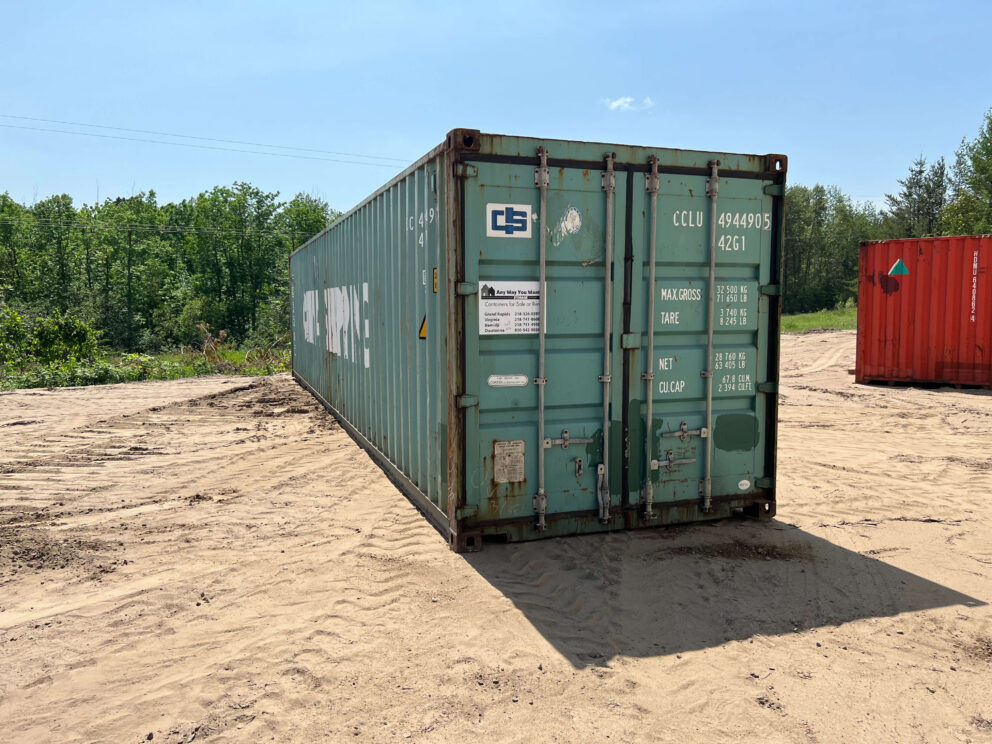
Short-term rental (weeks to a few months). Firm, level, dry ground is usually enough. A gravel driveway, asphalt, or packed crushed rock works well. On delivery day, if the spot slopes or feels soft, our driver sets wood blocking under the corner castings to level the unit. Our delivery day walkthrough covers that process step by step.
Long-term storage on your own property. Plan a prepared base. For most storage containers, that means a compacted gravel pad with good drainage. This is the point where a little site work up front saves you from sticking doors and a twisted frame later.
Permanent or modified use. If you are turning a container into an office, workshop, or shop space with modifications like insulation, windows, or a man door, treat it more like a building. Your city or county may require permits, and a permanent setup is where concrete piers, a slab, or engineered footings come into the conversation.
How a Shipping Container Carries Its Weight
A container is not designed to rest evenly on its whole floor. It carries its load through four corner posts down to the corner castings, the steel blocks at each bottom corner. That is where support matters most.
Empty containers are heavy on their own. A 20-foot container weighs roughly 4,850 to 5,200 pounds. A 40-foot container runs around 8,265 pounds. Then you add whatever you put inside.
All of that weight concentrates at the corners. On soft or uneven ground, one corner sinks faster than the others. The frame twists slightly, and the doors start to bind. A container that sits out of level often fights you at the doors within a season. That is why the goal of any base is simple: keep all four corners at the same height, on ground that will not shift unevenly.
What Minnesota Ground Does to a Container Base
Generic container guides say “find level ground” and stop there. Minnesota adds frost, mixed glacial soils, and a long spring thaw.
Frost Depth: Minnesota Uses Two Code Zones
Minnesota’s building code sets minimum footing depths for frost protection in Minnesota Rules, part 1303.1600. Unless an engineer competent in soil mechanics determines otherwise, the minimum is:
- Zone I (northern counties): 5 feet. This includes Itasca County, where our Grand Rapids yard sits, plus St. Louis, Cass, Aitkin, Crow Wing, and other northern counties.
- Zone II (southern and central counties): 3-1/2 feet. This includes Steele, Olmsted, Rice, Mower, Freeborn, and Hennepin counties, which cover our Ellendale and Stewartville service areas and much of the Twin Cities.
Here is what that means for a container. These depths apply to footings for buildings that need frost protection. A container resting on a gravel pad is not sitting on frost footings. It rides on top of the ground and moves when the ground moves. For storage, that is often acceptable, as long as the movement is even and you check level after the thaw.
Frost depth starts to matter when your container is part of a permanent structure, when it is attached to something that cannot move with it, or when your local building official treats it as a building. In those cases, ask your building department what they require before you build anything.
Frost Heave Depends on Your Soil and Water
Frost heave happens when water in the soil freezes and expands. Not every soil heaves the same amount.
Research on Minnesota frost conditions consistently points to fine-grained soils as the problem. Silty soils are the most susceptible to frost heave. Clays fall in the medium to high range. Clean sands and gravels have low susceptibility because they drain and do not pull water up toward the freezing zone.
Water is the fuel. A high water table, a low spot that collects meltwater, or a downspout aimed at your pad all make heave worse. Uneven heave is what hurts containers. If one corner sits on wet clay and another on drier fill, they lift at different rates.
Minnesota Soil Changes from Region to Region
Minnesota soils were shaped by glaciers, and they vary a lot, sometimes within one property. The University of Minnesota Extension describes several major types:
- Glacial till, common across much of the state, often has silty clay loam to silty clay textures and poor internal drainage.
- Lake-bed (lacustrine) soils, like those in the Red River Valley, are clay-heavy and drain poorly.
- Outwash sands, found in areas like the Anoka Sand Plain and the North Central Sands, drain very well.
Northern Minnesota also has peat and other organic soils in low, wet areas. Peat compresses under load and is a poor base for anything heavy.
The takeaway: do not assume your site behaves like your neighbor’s, or like a job site across the county. If you are not sure what you have, dig a test hole or ask a local excavator.
Spring Thaw Softens the Surface First
The top layer of ground thaws before the soil below it. Meltwater has nowhere to drain, so the surface turns soft even when the ground looks solid. A spot that held a container fine in January can rut or settle in April. Plan your base for its worst week, not its best one.
Shipping Container Foundation Options Compared
No single base fits every Minnesota site. Here is how the common options stack up.
| Base option | Best fit | Minnesota watch-outs |
| Firm native ground with blocking | Short-term rentals on dry, level, well-drained ground | Softens in spring thaw; avoid low spots and peat |
| Compacted gravel pad | Most long-term storage | Needs good drainage and a stable subgrade under the rock |
| Concrete blocks, timbers, or railroad ties | Raising corners for airflow and leveling | Shallow supports can heave unevenly; recheck level each spring |
| Concrete piers | Permanent setups, sloped sites, attached structures | Only protect against frost if set to the depth your local code or engineer requires |
| Concrete slab | Permanent installs with frequent foot or equipment traffic | Highest cost; still affected by soil and drainage; can trap water under the floor |
Firm Native Ground with Blocking
For a short rental, this is often all you need. The ground must be firm, dry, and close to level. Grass over well-drained soil can work in summer. The same spot can fail in April. Tell us your surface when you book so we can plan the trailer and the timing.
Compacted Gravel Pad
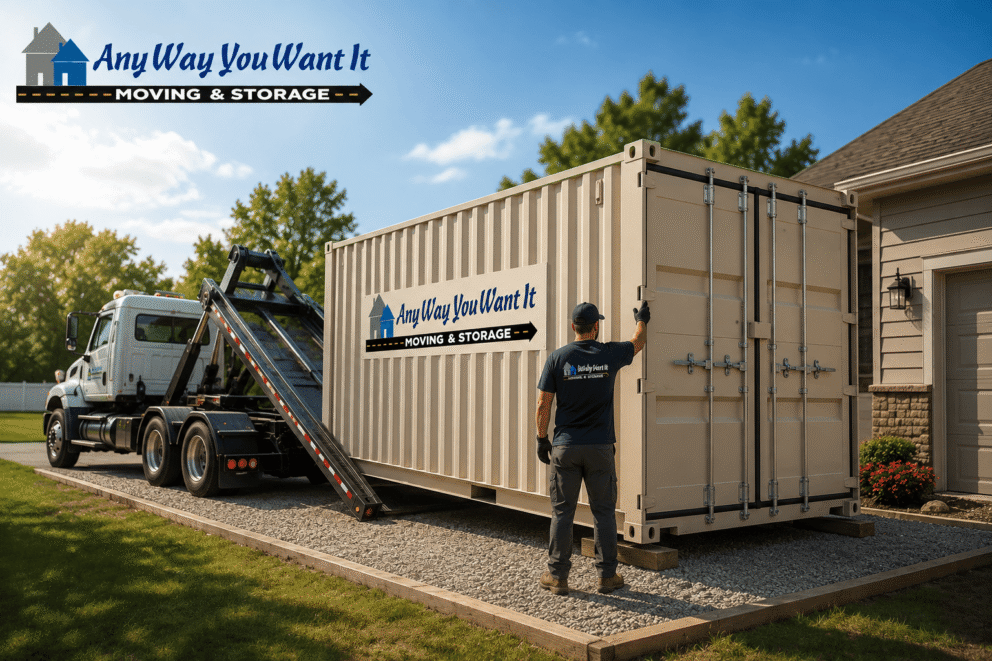
For most long-term storage containers, a compacted gravel pad is the practical choice. Angular crushed rock locks together, drains fast, and spreads the load better than bare soil. Strip the topsoil and organic material first, since that layer settles. Extend the pad past the container’s footprint so the edges do not crumble under the corners.
Pad thickness and base prep depend on your soil. A local excavator or landscaper can size it for your site. Expect the pad to move slightly with frost. Because gravel drains well, that movement is usually more even than on bare clay.
Concrete Blocks, Timbers, or Railroad Ties
Setting the corners on blocks or timbers raises the steel floor off the dirt. That helps airflow, keeps the underside dry, and slows rust, as we cover in our guide to keeping rust off your shipping container.
The catch in Minnesota: individual supports sitting in frost-prone soil can heave independently. One block lifts, the next does not, and the frame twists. Blocks work best on top of a gravel pad, not pushed straight into wet clay. Check the doors each spring and re-shim if needed.
Concrete Piers
Piers make sense for permanent installs, sloped lots, or containers tied into decks, roofs, or other structures. A pier only protects against frost heave if it goes deep enough. Shallow piers sit inside the frost zone and can lift just like blocks. Pier depth, diameter, and spacing should come from a contractor or engineer who knows your soil and your local code.
Concrete Slab
A slab gives you a clean, hard surface, which helps if you use the container as a shop with heavy foot or equipment traffic. It is also the most expensive option, and it does not cancel out soil problems. Minnesota’s code generally does not allow slab-on-grade construction on peat or muck, which tells you how seriously those soils are treated.
If you set a container on a slab, do not let the steel floor sit flat on concrete with water running underneath. Keep the slab sloped to drain and the corners supported so air can move under the unit.
Drainage Matters More Than the Base Material
A great gravel pad in a wet hole still fails. Before you pick a base, pick the spot.
- Choose the high ground. Avoid low areas where snowmelt and rain collect.
- Slope the surrounding grade away from the container so water runs off the pad, not into it.
- Redirect downspouts and roof runoff from nearby buildings.
- Do not pile plowed snow against the container. Those piles melt slowly and soak the base all spring.
- Leave room at the door end. Doors swing wide, and ice buildup at the threshold can freeze them shut.
Our post on preparing your container for winter in Minnesota covers moisture control inside the unit once it is in place.
Permits, Zoning, and When to Call a Professional
Rules for shipping containers vary by city, county, and township. Check before you prepare a site, not after.
Many Minnesota cities follow the state residential code’s building permit exemption for detached accessory structures of 200 square feet or less. A 20-foot container covers about 160 square feet. A 40-foot container covers about 320 square feet. But exempt from a building permit does not mean allowed. Zoning rules, setbacks, and lot coverage limits still apply, and some communities restrict or prohibit shipping containers as accessory structures altogether. Long-term placement on residential property draws the most scrutiny.
Call your local zoning or building office with three facts: the container size, how long it will stay, and what you will use it for.
Bring in a contractor, excavator, or engineer when:
- Your site has peat, muck, standing water, or a high water table
- The ground slopes enough that one end needs significant support
- The container will be modified for regular occupancy or work use
- You plan to attach it to a deck, roof, or another structure
- Your building official requires frost footings or engineered plans
How We Help You Plan Container Placement
We focus on the container and the delivery. Before every drop, we confirm your site by phone. We ask about the surface, the truck’s path, overhead clearance, and which way you want the doors to face.
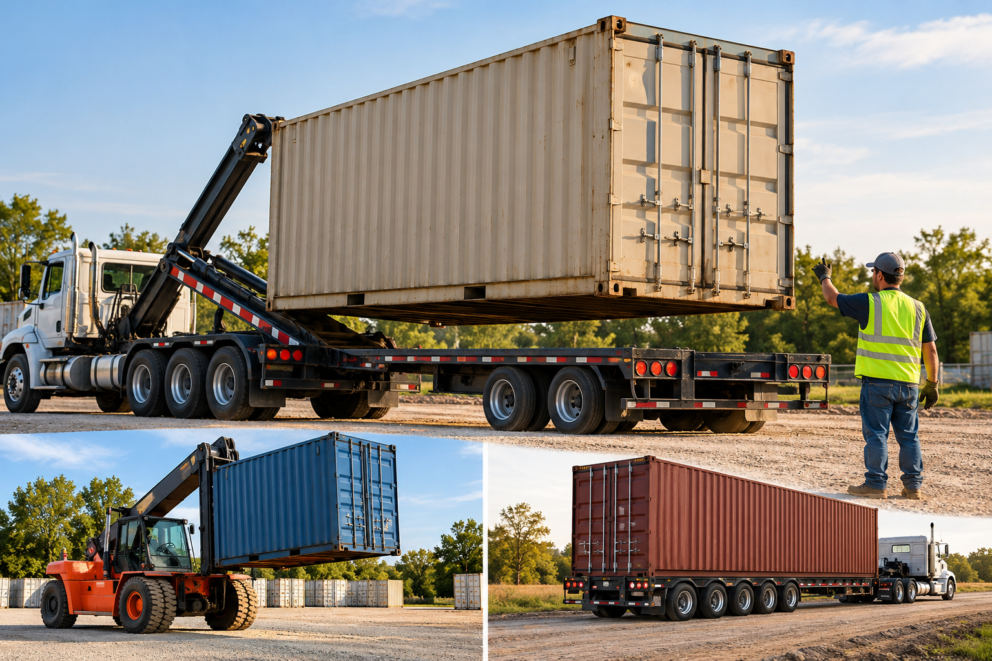
We run both tilt-bed and side-loading trailers, so we can match the truck to your site. On delivery day, our driver checks the ground and levels the container with wood blocking under the corners when needed. Your container arrives at ground level, ready to load. Check our delivery page for more on how we schedule drops.
If your site needs a gravel pad, piers, or a slab, have that work done before your delivery date. Then tell us what the surface is, and we will plan around it.
Shipping Container Foundation FAQs
Can I put a shipping container directly on the ground in Minnesota?
Yes, for many short-term uses, if the ground is firm, dry, and level. Bare soil gets risky during the spring thaw and on clay or peat. For long-term placement, a gravel pad or raised corner supports hold up better.
Does a shipping container need a frost footing?
Usually not for basic storage on a gravel pad. Frost footings matter when the container is part of a permanent structure, attached to something that cannot move, or when your local building official requires them. Minnesota’s code minimums are 5 feet in northern Zone I counties and 3-1/2 feet in southern Zone II counties, unless an engineer determines otherwise.
Is gravel or concrete better under a container?
For most storage containers, compacted gravel is the better value. It drains well and handles freeze-thaw movement more evenly. Concrete piers or a slab make more sense for permanent, modified, or attached setups.
How do I keep my container level through freeze-thaw cycles?
Start with a well-drained base and keep water away from it. After the spring thaw, open and close the doors. If they bind or drag, check the corners and adjust the shims or blocking.
Do I need a permit for a shipping container in Minnesota?
It depends on where you live, the container size, and how long it stays. Some places require a permit or limit containers on residential lots. Check with your local zoning office before you prepare a site or book delivery.
Get the Right Container Set on the Right Ground
A good base is mostly good planning. Know your soil, keep water away, and match the base to how long the container will stay.
When your site is ready, we will handle the rest. You can rent a shipping container, buy one outright, or go rent-to-own. Not sure which size fits your space? Compare our 10-foot containers, 20-foot, and 40-foot units, or visit one of our yards to pick yours in person.
Call (218) 326-0397 for our Grand Rapids yard, or (800) 542-0036 for Ellendale and Stewartville. You can also request a free quote online. Tell us your delivery ZIP and the surface where the container will sit.