A shipping container is built to be moved. That does not make it easy to move.
An empty 20 foot container weighs about 4,850 to 5,200 pounds. A 40 foot unit runs about 8,000 to 8,800 pounds. Fill either one with furniture, tools, or inventory and that number climbs fast. Weight decides which trailer you need, how the contents have to be packed, and whether your site and the roads can handle the trip.
Here is how moving a shipping container actually works, what changes when it is full, and what to do before you schedule the move. We have moved full and empty containers out of our Grand Rapids, Ellendale, and Stewartville yards since 1997.
The Short Answer
To move a shipping container, you need a truck and a trailer built to load it, haul it, and set it back down. For most residential, farm, and job site moves, that means a tilt-bed or side-loading trailer. No crane required.
- Empty containers are a routine move. The main questions are access and ground conditions at both ends.
- Full containers can be moved too. The contents need to be packed for transport, the total weight has to work for the trailer and the roads, and the driver needs to know what is inside before the truck leaves the yard.
The Equipment Used to Move a Shipping Container
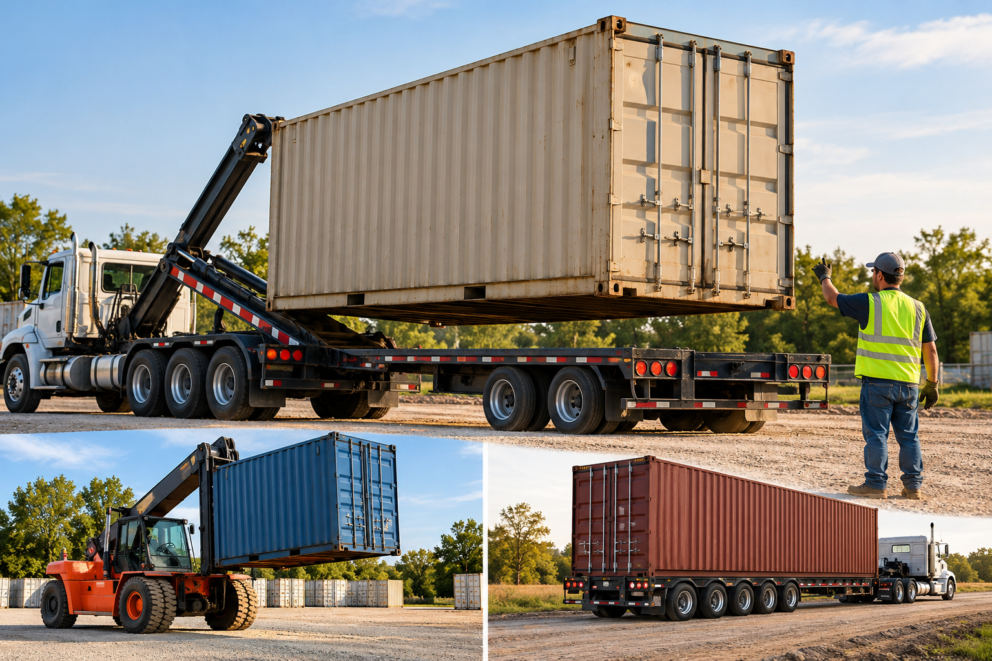
You cannot push, drag, or roll a container into place. It has to be lifted onto a trailer and set back down at ground level. We run two types of trailers, and each one fits a different kind of site.
Tilt-bed trailers
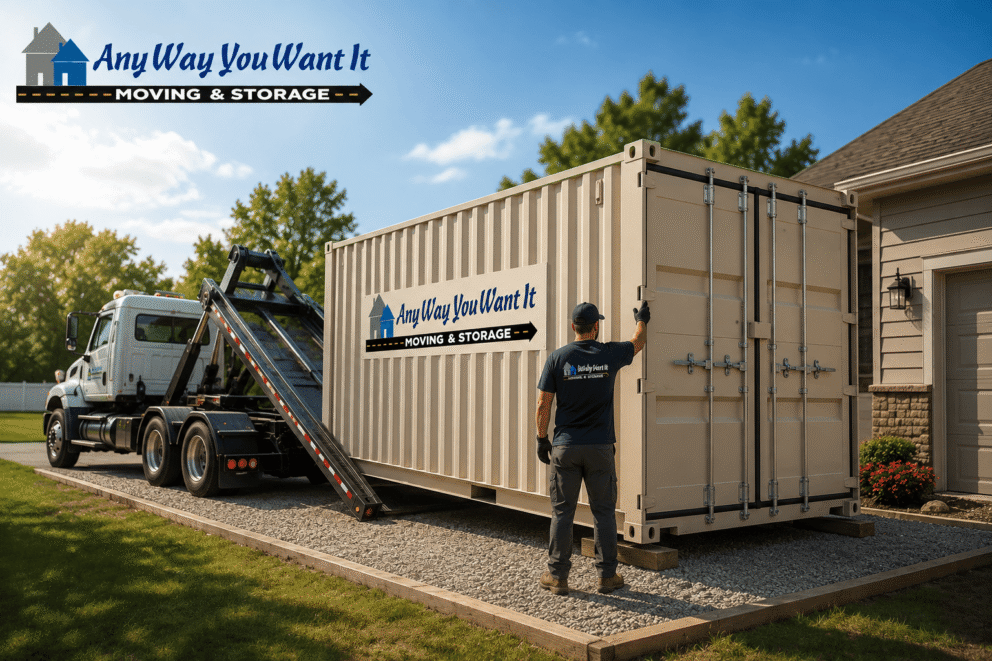
The trailer bed tilts back until it meets the ground. At pickup, the container is pulled up onto the tilted bed. At drop-off, the truck eases forward and the container slides off into place. A tilt-bed needs a long, straight, clear approach behind the truck.
Side-loading trailers
Hydraulic cranes mounted on the trailer lift the container off the side and lower it straight down. Side-loaders work where a tilt-bed cannot back up far enough, such as a narrow driveway, a spot along a fence line, or a tight corner next to a building.
We choose the trailer based on your site, not on which truck is closest. Our walkthrough of what happens on shipping container delivery day shows both methods step by step.
Moving an Empty Shipping Container
Most container moves start empty. New deliveries, rental returns, and repositioning a unit on the same property usually involve an empty box.
| Container size | Approximate empty weight |
| 20 foot | 4,850 to 5,200 lbs |
| 40 foot | 8,000 to 8,800 lbs |
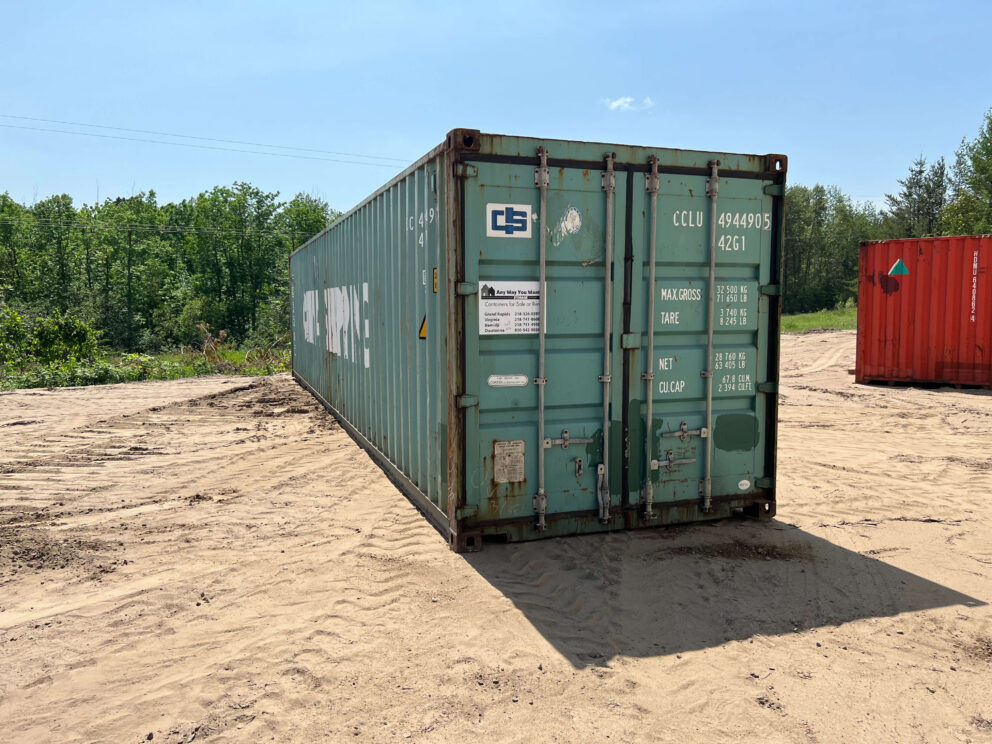
The exact figure for your unit is on the CSC plate on the door. Every container carries its own plate.
Even empty, a container is heavy enough to rut a soft lawn and sink into thawing ground. The site matters as much as the truck. Here is what an empty move needs:
- Firm, level ground at the drop site. Gravel, crushed rock, or blocking under the four corner castings keeps the unit level and lets water drain away.
- A clear, straight approach. For a tilt-bed drop, plan on roughly 60 to 70 feet of straight run for a 20 foot container and 100 feet or more for a 40 foot container.
- Overhead clearance. Power lines, branches, gutters, and low rooflines stop a delivery cold. A 40 foot tilt-bed drop needs about 18 to 20 feet of overhead clearance for the raised bed.
- A door direction you have already decided. Once a container is set, turning it around means another truck visit.
Working with a small lot? A 10 foot container fits far tighter spaces, and our side-loading trailers need much less straight-line room than a tilt-bed.
Moving a Full Shipping Container
Moving a container while it is loaded is what makes containers so useful for moves, remodels, and job site changes. You load once. We haul the container with everything still inside.
It also takes more planning than an empty move. Three things change.
1. The weight goes up, and it has limits
A loaded container’s total weight is its empty weight plus everything inside it. The CSC plate on the door lists the unit’s empty (tare) weight and its maximum gross weight. Those figures describe what the container itself is rated to carry. They are not the limit for the truck, the trailer, or the road.
That is why we ask what is inside before we schedule. A container of household boxes and a container of steel parts or seed are very different loads, even at the same size. Give us your best estimate and point out anything unusually heavy.
2. Contents can shift during the move
On a tilt-bed, the container sits at an angle while it loads and unloads. Anything loose slides toward the low end. Loads can also move on the road. Shifted contents can damage your belongings and the container, and they can end up pressed against the doors, which makes the doors hard and unsafe to open.
3. Roads and seasons matter more
More weight puts more stress on soft ground and posted roads. Each spring, Minnesota posts load restrictions on many roads during the thaw. MnDOT sets the dates for state highways by zone, and counties and cities post their own roads. A move that is simple in July can need a different date in April.
We track the postings for our routes and tell you if they affect your address. Our delivery day guide covers how frost and spring thaw affect scheduling in more detail.
How to Pack a Shipping Container That Will Be Moved Full
Pack for the trip, not just for storage. A load that sits fine in your driveway can shift badly once the container tilts.
- Load heavy items first, on the floor. Appliances, dressers, and toolboxes go down low, starting at the closed end. Spread the weight along the length of the container instead of piling it in one spot.
- Balance side to side. Do not stack all the heavy pieces along one wall.
- Never stack heavy on light. Boxes of books do not go on top of lampshades.
- Fill every gap. Use mattresses, cushions, and furniture pads to brace the load so nothing has room to slide.
- Tie down tall items. Strap tall furniture and equipment to the container’s lashing points if your unit has them.
- Wrap furniture. Pads and stretch wrap keep drawers and cabinet doors from swinging open in transit.
- Finish with a stable wall at the doors. Nothing should lean against the doors when they close.
- Pack dry. Damp rugs, outdoor furniture, and appliances can lead to mold and odors once the doors are shut.
- Lock it. Use a quality lock before the driver arrives.
When the container reaches its new spot, open the doors slowly and stand to the side in case anything moved. For more packing and security tips, read our guide on keeping your belongings safe in a storage container during a move.
Full vs. Empty: What Changes
| Empty container | Full container | |
| Weight | 20 ft: about 4,850 to 5,200 lbs. 40 ft: about 8,000 to 8,800 lbs | Empty weight plus everything inside |
| Packing | None needed | Load low, balance, brace, and secure everything |
| What we need from you | Size, addresses, and site details | All of that, plus what is inside and a weight estimate |
| Seasonal timing | Spring road postings can affect the date | Spring road postings matter more with the added weight |
| Common reasons | New delivery, rental return, repositioning | Household moves, multi-stage moves, job site changes |
Can You Move a Shipping Container Yourself?
For most people, no. Here is why.
- Dragging is not an option. Pulling a container across the ground can damage its frame and floor, and it tears up the site.
- Your equipment has to be rated for the full weight. An empty 20 foot unit is already around 5,000 pounds. A mistake with that much steel can injure someone fast.
- A loaded container is a professional job. Shifting contents and higher weight make an already heavy lift less predictable.
- Road travel needs the right rig. The truck and trailer must be rated for the load and legal on every road along the route.
Hiring a container hauler costs less than a damaged container, a ruined driveway, or an injury.
How We Move Shipping Containers for Our Customers
Every move follows the same process, full or empty.
- You call or request a quote. Tell us the container size, whether it is full or empty, and the pickup and drop-off locations.
- We check the site. We ask about the ground surface, the truck’s path, anything overhead, and which way you want the doors to face.
- We match the trailer. Tilt-bed for open sites with a long straight approach. Side-loader for tighter spots.
- We call ahead. You get a heads-up on timing before the driver rolls out.
- We set it level. The driver places the container at ground level and blocks the corners if the ground needs it. You open and close the doors before the driver leaves.
Many customers use one container for an entire move. They load at the old house, we haul it, and they unload at the new place on their own schedule. Our guides on coordinating a multi-stage move and how portable storage makes moving easier show how that works. Contractors do the same thing between job sites, which we cover in our guide to construction site storage.
Need a container to move in the first place? You can rent a shipping container, buy one outright, or start with rent-to-own. You are welcome to visit any of our yards and pick out the exact unit you want. When a rental is done, call us and we pick it up.
Shipping Container Moving FAQs
Can you move a shipping container while it is full?
Yes. Our drivers pick up and deliver full and empty containers using tilt-bed and side-loading trailers. Pack the load for transport and tell us what is inside before we schedule.
How much does a full shipping container weigh?
It depends on what is inside. Start with the empty weight, about 4,850 to 5,200 pounds for a 20 foot unit and 8,000 to 8,800 pounds for a 40 foot unit, then add your contents. Never load past the maximum gross weight on the container’s CSC plate.
Can you move my container to a different spot on my property?
Yes, with another truck visit. The same site requirements apply, so check the ground, the approach, and the overhead clearance at the new spot.
Do I need to be there when the container is moved?
It helps. Someone on site can confirm placement and door direction before the driver sets the unit. If you cannot be there, mark the spot clearly and send us a photo ahead of time.
How much does it cost to move a shipping container?
Pricing depends on the details of your move, including the distance from our nearest yard to your site. Call us or request a free quote for an exact number.
Do I need a permit to move a shipping container?
Rules vary by city, county, and township. Some places require a permit for a container on residential property, especially long term. Check with your local zoning office before the move.
Schedule Your Shipping Container Move
Good container moves come down to planning. Tell us the size, whether it is full or empty, where it is now, and where it needs to go. We match the trailer and the date to your site.
Call (218) 326-0397 in Grand Rapids or (800) 542-0036 for Ellendale and Stewartville. You can also request a free quote online and give us your delivery ZIP. Learn more about our shipping container delivery service.
Spring and summer fill up fast during the building season. If your date is firm, book early.